
We’ve all been there. You find the perfect sofa online, hover over the “Add to Cart” button, then pause. Will it fit? Does that shade of blue match your walls? Is it too bulky for your living room? These questions have plagued online shoppers for years, leading to abandoned carts and costly returns.
Enter Augmented Reality
Augmented reality is transforming this familiar frustration into an interactive experience. Instead of imagining how products might look in your space, AR lets you see them there before you buy. It’s not science fiction anymore, it’s becoming the new standard in retail.
Technology Behind The Magic
Under the hood, AR retail apps use sophisticated computer vision and spatial mapping. Your phone’s camera and sensors work together to detect surfaces, measure distances and understand room’s dimensions. Technologies like ARKit for iOS and ARCore for Android provides the framework using simultaneous localization and mapping (SLAM) to track your device’s position in 3D space.
The app overlays photorealistic 3D models onto your camera feed adjusting for lighting conditions and perspective in real-time. Advanced versions even incorporates ray tracing to cast realistic shadows and reflections making virtual objects blend seamlessly with your actual environment. Machine learning algorithms continuously improves accuracy, ensuring that a six-foot couch appears exactly six feet long on your screen.
This isn’t just a gimmick. Major retailers like IKEA, Wayfair, and Amazon have integrated AR features into their apps and the results speak for themselves. Customers who use AR are significantly more likely to complete purchases and less likely to return items.
Beyond Furniture Shopping
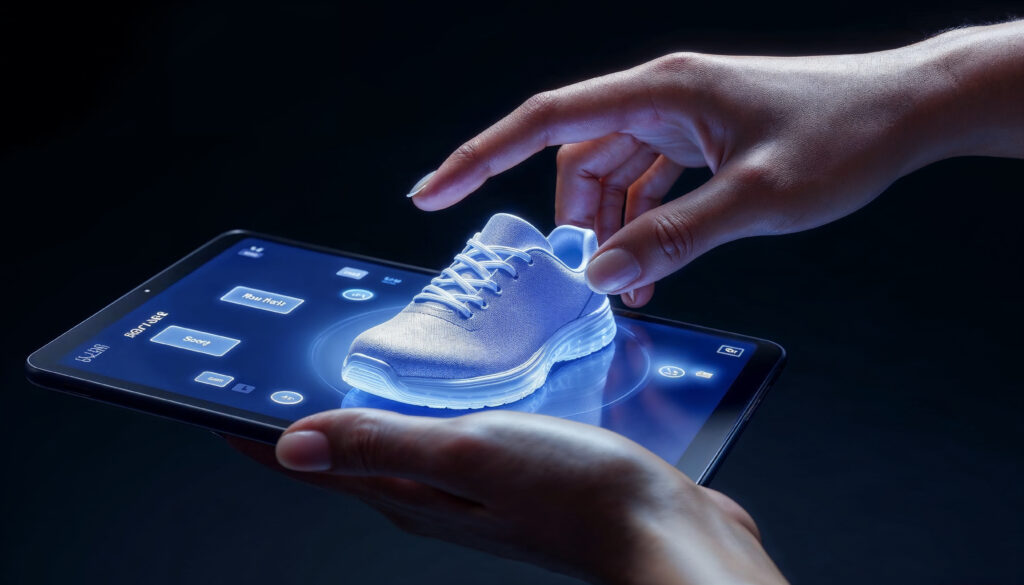
While home furnishings led the AR revolution, the technology is expanding rapidly. Fashion retailers let you virtually try on shoes and accessories. Cosmetics brands enables you to test makeup shades on your actual face. Even grocery stores are experimenting with AR to show nutritional information and recipe suggestions.
The automotive industry has embraced AR showrooms where you can customize your dream car’s color and features, then see it parked in your driveway. Jewelry stores let you try on engagement rings without leaving home. The possibilities continues to multiply.
The Confidence Factor
What makes AR truly powerful is the confidence it gives shoppers. When you can visualize exactly how something will look, fit and function in your environment, the purchase decision becomes easier. That confidence translates to higher satisfaction rate and fewer buyer’s remorse returns.
For retailers, this means reduced return cost, improved customer loyalty and a competitive edge. For shoppers, it means making better decisions and enjoying their purchases more.
Making The Shift
The shift from traditional e-commerce to AR-enhanced shopping represents more than technological progress. It’s about removing friction, building trust and creating experiences that feels personal and certain. As more retailers adopt these tools and more consumers discover their benefits, AR is becoming not just an option but an expectation.
For brands looking to embrace this transformation, partnering with experts makes all the difference. AffableTech, a pioneer in AR retail implementation, helps brands achieve success with innovative, custom-tailored AR solutions that resonates with customers and drives measurable results.
The future of retail isn’t about choosing between online convenience and in-store confidence. With augmented reality, we get both.


